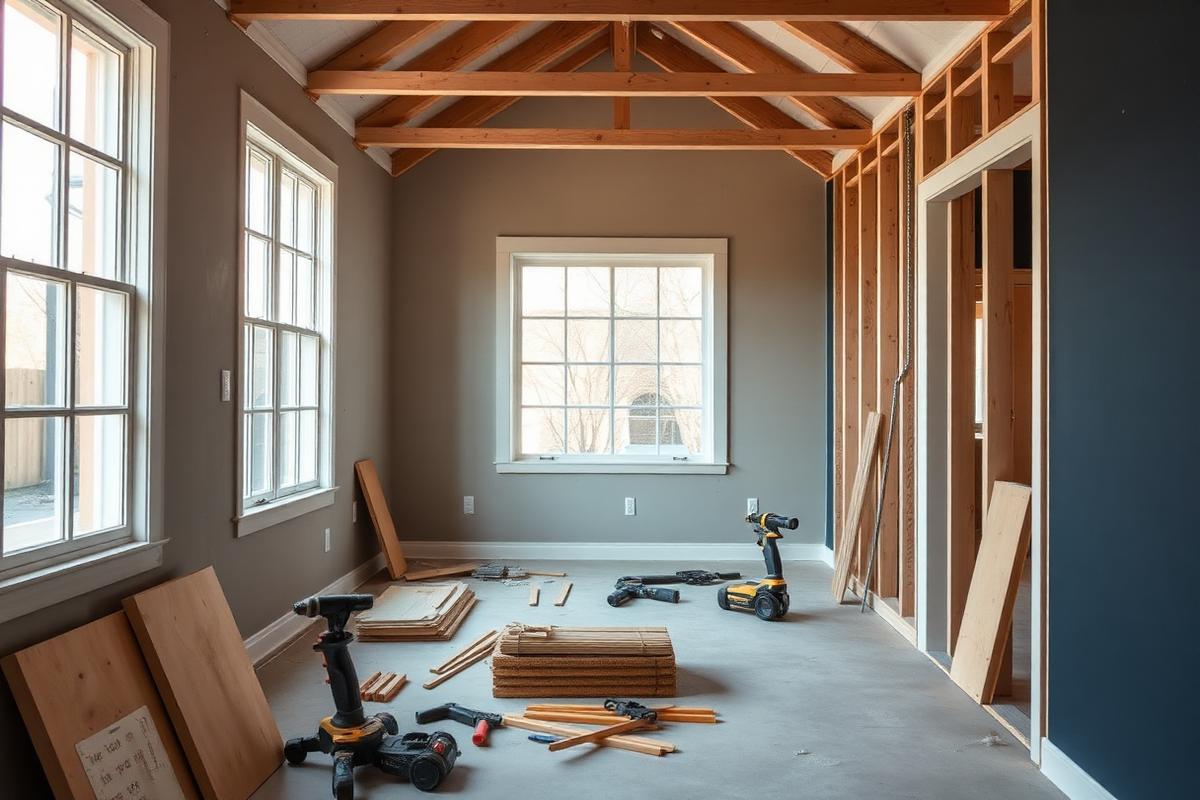
A profitable fix-and-flip starts long before the first wall comes down. Acquisition price, renovation planning and financing structure all affect whether a project has enough room to succeed.
Most flips that disappoint do not fail because of one dramatic event. They fail because the margin was thin at the start and a series of ordinary surprises consumed it. Three decisions tend to matter most, and all three are made before the work begins.
1. Building a Rehab Budget That's Too Optimistic
Renovation budgets drift for reasons that have nothing to do with poor management. Once demolition starts, conditions appear that were not visible during the walkthrough, and the cost of executing the plan can shift.
- Hidden property conditions behind walls, under floors or in mechanical systems.
- Contractor pricing that changes with availability and scope.
- Material costs that move between estimate and purchase.
- Permitting requirements and inspection timelines.
- Scope changes added once the property is opened up.
- Labor availability in the local market.
- Project delays that extend the schedule.
The defense is preparation rather than optimism. Write a detailed scope of work before making an offer, get realistic estimates from contractors who have seen the property, carry a contingency for the unknown, and account for holding costs across a timeline longer than the best case.
2. Leaving Too Little Margin at Acquisition
Investors make most of their money when they buy correctly, not simply when renovations are completed. Excellent execution rarely rescues a purchase price that was too high, because the finished value is set by the market rather than by what the project cost.
A disciplined acquisition analysis weighs all of the following together:
- Purchase price and the terms attached to it.
- Comparable sales that genuinely match the finished product.
- After-repair value supported by those comparables.
- Renovation costs, including contingency.
- Financing costs across the expected hold.
- Holding costs: taxes, insurance, utilities and interest.
- Selling costs, including commissions and concessions.
- Market conditions and how long similar properties take to sell.
An aggressive ARV or an overly high purchase price removes the margin that would otherwise absorb an unexpected expense or a slower sale. When the analysis only works under ideal assumptions, the deal has no room in it.
ARV drives much of the renovation analysis. Our primer explains how it is estimated and supported:
3. Using Financing That Doesn't Match the Business Plan
Financing should support the project rather than work against it. A structure that fits a quick cosmetic refresh may be poorly suited to a gut renovation, and a term built around a fast resale may not accommodate a plan to refinance and hold.
- Renovation draw structure: how funds are requested, inspected and released.
- Loan duration measured against the realistic construction and marketing schedule.
- Borrower capital required at closing and during the project.
- Carrying costs while the property is not producing income.
- Project timeline, including permitting and contractor sequencing.
- Exit strategy: sale versus refinance into longer-term financing.
Understand how and when renovation funds become available before committing to financing. Draw timing shapes the working capital an investor needs on hand, and a mismatch there can stall a job that was otherwise on schedule.
See how renovation financing is structured for investors:
Protect the Deal Before the Renovation Begins
No investor controls every unexpected problem on a renovation. What experienced investors do control is their position going in: a purchase price supported by real comparables, a renovation plan built on realistic estimates with contingency, and financing aligned to the timeline and the exit.
Those three decisions are made before demolition begins, and they determine how much room the project has when something does go differently than planned.
Planning a fix & flip? Send WJR Equity Lending the property, purchase price, rehab budget, estimated ARV and exit strategy.
Related Reading
All insights
Investor Education
Lowest Interest Rates Are Not Always the Best Deal
August 11, 2026 · 7 min read · Bill Reich
Investor Education
5 Ways Financing Can Help Real Estate Investors Scale
August 11, 2026 · 9 min read · WJR Equity Lending